Wednesday, 5 November 2008

Social Media


The question now is how many people will be left to cover it.


It seems a bleak industry to be entering - the lectures every week are focusing or at least start by focusing, on the demise of the media and how traditional models of journalism are crumbling around us. It’s like a real life fairy tale. We start off with the doom and gloom and look at how things have been destroyed.
The 3 P’s being the baddies,

Baddie No1: power to publish,
Baddie No 2: power to participate
Baddie No 3: power to choose

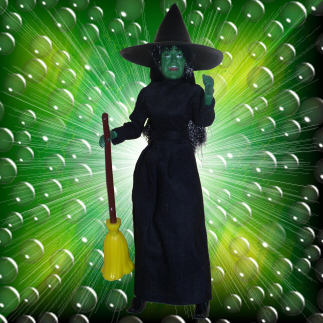
We see how over the last decade these sources of power have set about killing off the traditional forms of media. The baddies have done their work and have given the wicked witch the power to create her own news, sitting in her dark and eerie castle she now doesn’t have to wait for the news she can just access it whenever she wants and access the exact piece of news she wants. She can create her own news, she can actually comment on and start a discussion of her own. The wicked witch is in control! She may just as well lock up the traditional journalist in the tower and throw away the key. THE END…


Or is it the beginning of a new tale? Enter the remodelled journalist on his white horse, equipped and ready with the appropriate tools and the adaptable skill base! He’s ready for this new world of sharing and creating communities. As he’s riding along he connects to the internet on his mobile phone and sees that the wicked witch has just used Twitter to release a breaking news headline. She’s also posted a very interesting blog and made friends with the prince on umpteen different social networking sites. They follow and comment on each others blogs and share interesting links with one and other and they all live happily ever after. THE END


Each week I am introduced to more forms of social media sites. It’s an exciting time for us as journalist as long as we keep up with the latest technologies. I still don’t believe that UGC or social media will replace the traditional forms of journalism we have. However, I now understand and appreciate how they can have a symbiotic relationship. Nobody can answer the question about where journalism is heading but as we can see it has and continues to evolve at quite a pace so I’m sure there’ll be many more tales to tell – A new broomstick sweeps clean! “Witch” this space!!!!!!!!




Storytelling is and always has been the source of every art form. We think in story form, we make sense of the world around us through narrative – the evening news, the documentary, the radio feature, the newspaper article, to the family stories we remember and we retell. Thanks to new media and the developments of technology anyone can now tell their story. An individual in a remote little village anywhere can potentially make their own multimedia story which can be shared with others around the world at anytime. Programs are no longer simply made by big production companies and stories are not only found and retold by journalists. We have definitely moved into the realm of participatory media.

In the lecture last week with Daniel Meadows we discussed what exactly the public, or anyone for that matter, need to be able to produce a story. In order for participatory media to work it has to encompass a strong story and has to be strong, it has to be told in the best possible way. It’s about transferring skills from the facilitator to the story maker. There has to be ownership of the story - the storyteller has to have complete control over the story and the need for what is made to be shared.

The projects we looked at such as ‘Capture Wales’ gave wonderful insights into people’s lives, some emotional and others funny but for a few minutes we were captured by a stranger’s story - they were as *** suggested multimedia sonnets from the ordinary people. One individual who possibly had never done anything of the sort before was suddenly taking on the role of the news maker, the storyteller, the editor, the producer, the writer and the presenter. Through making one little mini movie of a few minutes in length it allowed the skill base these people had to expand dramatically.


Ofcom are encouraging this type of program making and it is easy to understand why. It creates a real sense of community and a sense of sharing. I looked up a few different websites after the lecture and thought that this summed it up. Storytelling no matter in what form can be educational and can only help to better societies understanding of one and other.

‘Emotions are being triggered by events shared with each other,’ Filipino woman, Leonida ‘Baves’ Ventura said, reflecting on their story sharing. Aboriginal elder, Aunty Norma Shelley said, ‘We all accepted our differences…while I have never been to the Philippines, I feel I now understand the Filipino way of life and culture more than I did.’

These stories are all short little insights into people’s lives. A way for people to reminisce and keep their memories alive. Not necessary anything news worthy but still an example of how UGC has come into it’s own in the world of broadcasting.

Tuesday, 28 October 2008

Read all about it! Read all about it! People make the news!


Citizen or participatory journalism ensures that we now hear more voices and get to hear the views of ‘Joe Public’, that is those who are truly affected by what is happening in the news. This contrasts with a previous age where newspaper owners and large media organisations were the sole gatherers of news content and tailored it to promote their own beliefs and self-interests. People can now share their thoughts, their opinions and their real life experiences. However, participatory journalism is not as straight forward as it first seems.

In the last few years, User Generated Content has taken gigantic steps towards allowing this more conversational style and as a result a more democratised media. UGC is now a huge part of the media industry, and is clearly being embraced by most if not all traditional media sources to differing extents. The flood gates have obviously opened especially in terms of the internet and instead of being told the news, all and sundry can now play their part in shaping it. However, there are two aspects that concern me in this debate. The first is the forgotten voices of society, and secondly, how trustworthy and informed are UGC sites in terms of news.


It is thanks to advances in technology, to web 2.0 in particular that audience interaction has exploded, especially in terms of the internet. However, not everybody has access to the internet. Is it not just the voice of the more affluent and the computer literate that fill our web pages? Until there is universal access for people of all social classes and ages to have a means to express their views the media cannot claim to be completely conversational or fully reflective of a democratic state.

In terms of news content, I have some reservations about UGC. Blogs for instance have no or very few checks to ensure their accuracy let alone their impartiality. Ordinary people may be making the news but how accurate and reliable is it? In this respect how trustworthy can theses sites really be? Referring back to Rupert Murdoch's Speech to the American Society of Newspaper Editors he makes the point that what ‘Joe Public’ wants is news on demand and a participatory element in the process of news gathering and broadcasting.

I know I run the risk of seeming to be a luddite, being adverse to the advances of technology but this is not the case. I believe there is a place for UGC to work alongside the traditional media sources. News sites such as the BBC have struck the right balance between allowing freedom for public conversational debate whilst at the same time through monitoring and checking the content being displayed by the 'prosumer' the reader can be assured that the facts are accurate.

To my mind User Generated Content adds colour and realism to the media. It is something which should be encouraged and nurtured in order to allow the media to become fully democratised.

Remember you read it here first!!!

Network Journalism

Definition of ‘Network’ - an association of individuals having a common interest, formed to provide mutual assistance, helpful information, or the like. So adding the word ‘network’ before the word ‘journalism’ does not sit paradoxically against one and other at all in fact it’s something which actually fits rather nice and neatly together.

Traditional journalism always relied upon building up information networks and contacts. Ok, at one time it possibly meant pounding the streets to find the contact with the specific subject knowledge you needed, or in more recent times picking up the phone, then the mobile phone, then more recently still being able to send an email. Now thanks to the wonder of web 2.0, things have progressed and our list of contacts and sources has increased beyond belief, our network has increased way beyond the newsroom.

Recently, we were asked in the lecture “What will be the media organisations job in the future if network journalism kicks off?” and “what will be the role of the news room?”

Without a crystal ball, who can say but I think what has already become clear is that news has and must continue to be a process of collaboration. Take a look at Jeff Jarvis’ diagram of the ‘new news process’ just to fully appreciate how much network journalism has opened up a much more conversational style of journalism and the multitude of layers which now exist in the process making. I can’t see any reason why UGC and journalists can’t work together to help one another, expanding the newsroom into the community. In a time of financial insecurity, and constant cut backs in media organisations surely it just makes sense. If members of the public are in a particular place when an incident occurs then let them get involved in news making. The images we all saw of 7/7 have taught us how important it is that the public get involved and share things with media organisations. These people were there at the scene long before the reporters and camera crews, and were able to capture the immediacy of the event.

Social networking sites, wikis, twitter and message boards and forums are communities. At first I was a bit pessimistic about them, not really fully understanding how they could be of benefit in terms of news. However, within the short space of time I’ve been using them I now see the scope they offer. They are in many ways just an active and extra large extension of the traditional contacts book - an extra means of accessing information.

In order to ensure accuracy and reliability I hope journalists always remain as gatekeepers of news but that they allow the public to contribute in the production of it. As Charlie Beckett warns, it is after all in the interest of the media to embrace network journalism and to stop seeing ourselves as owners but instead as collaborators.